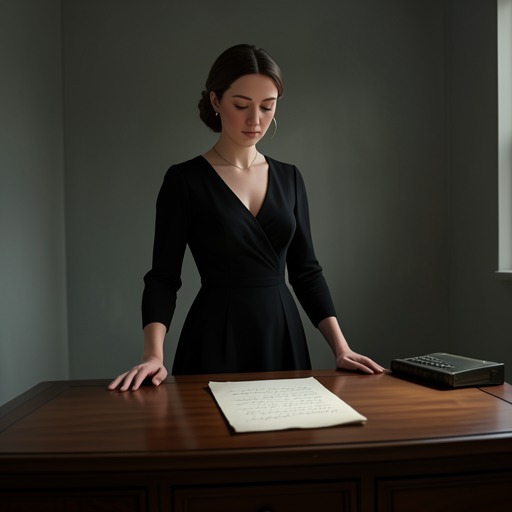
Time is nothing
The Time Traveler's Wife“Time is nothing” is Henry’s closing phrase to Clare, where it gathers the novel’s central contradiction: time governs their separations, yet cannot contain the love that outlasts them. Its force comes from its recurrence across a story told at different ages and in different years, culminating in Henry and Clare’s reunion in 2053.
The phrase in its final message
Henry ends his message to Clare with “I love you, always. Time is nothing.” The sign-off follows his account of a future visit in which he found Clare as an old woman, sitting in morning light with a cup of tea. He tells her that they will see each other again, then urges her to live fully in the present. The phrase is therefore not an abstract claim that chronology has no force: it follows an image of a future encounter and a direct acknowledgment that they must wait for it.
A story arranged across time
The novel’s dated scenes place the expression against a narrative that repeatedly moves between different moments in Henry and Clare’s lives. On October 26, 1991, Henry is 28 and Clare is 20 when Clare enters the Newberry Library for the first time, excited by its books and beginning research for an art-history paper. Other dated passages jump between Henry at 24 in 1988 and at five in 1968, between Clare and Henry at different ages in 2000, and between an event in 1984 and its later date in 2007. These shifts make the phrase resonate as a counterpoint to the reader’s effort to track when each encounter occurs.
The dates also distinguish the characters’ experiences: one moment may belong to one person’s past and another’s future. “Time is nothing” gives emotional continuity to a relationship whose scenes do not arrive in chronological order, without making their ages, circumstances, or separations interchangeable. The words offer a compact answer to the form of the story: time is structurally everywhere, even when Henry’s final sentence declares it nothing.
From foreknowledge to reunion
The phrase gains a concrete meaning in the contrast between Henry’s earlier vision and the later scene it anticipates. In a message to Clare, he describes seeing her as an old woman from a dark hallway, then leaves the details of that future meeting for her to experience unrehearsed. The later account is dated July 24, 2053: Henry enters a light-filled room, recognizes the white-haired woman by the window as Clare, and takes her into his arms. The earlier assurance thus returns as an encounter, not merely a promise.
This fulfillment gives the phrase its emotional weight. Henry’s words do not prevent absence or shorten the wait; they frame reunion as something the characters may still share beyond the moment in which he writes. The expression holds together the novel’s painful chronology and its enduring attachment, making time both the condition of separation and the medium through which love is remembered and renewed.